
Simanaitis Says
On cars, old, new and future; science & technology; vintage airplanes, computer flight simulation of them; Sherlockiana; our English language; travel; and other stuff
MAINTAINING DIVERSITY
THE UTTER IDIOCY OF DOGE has added yet another tooth on its chainsaw. It’s described by Drs. Iago Hale and Michael Kantar in “Why Did Elon Musk Go After Bunkers Full of Seeds?,” The New York Times, March 22, 2025.

Credentials. Dr. Hale is a professor of specialty crop improvement at the University of New Hampshire. Dr. Kantar is an associate professor of plant genetics at the University of Hawaii at Manoa. They write about the U.S. Department of Agriculture’s National Plant Germplasm System, established in 1898 to gather and maintain plant species that undergird our food system.
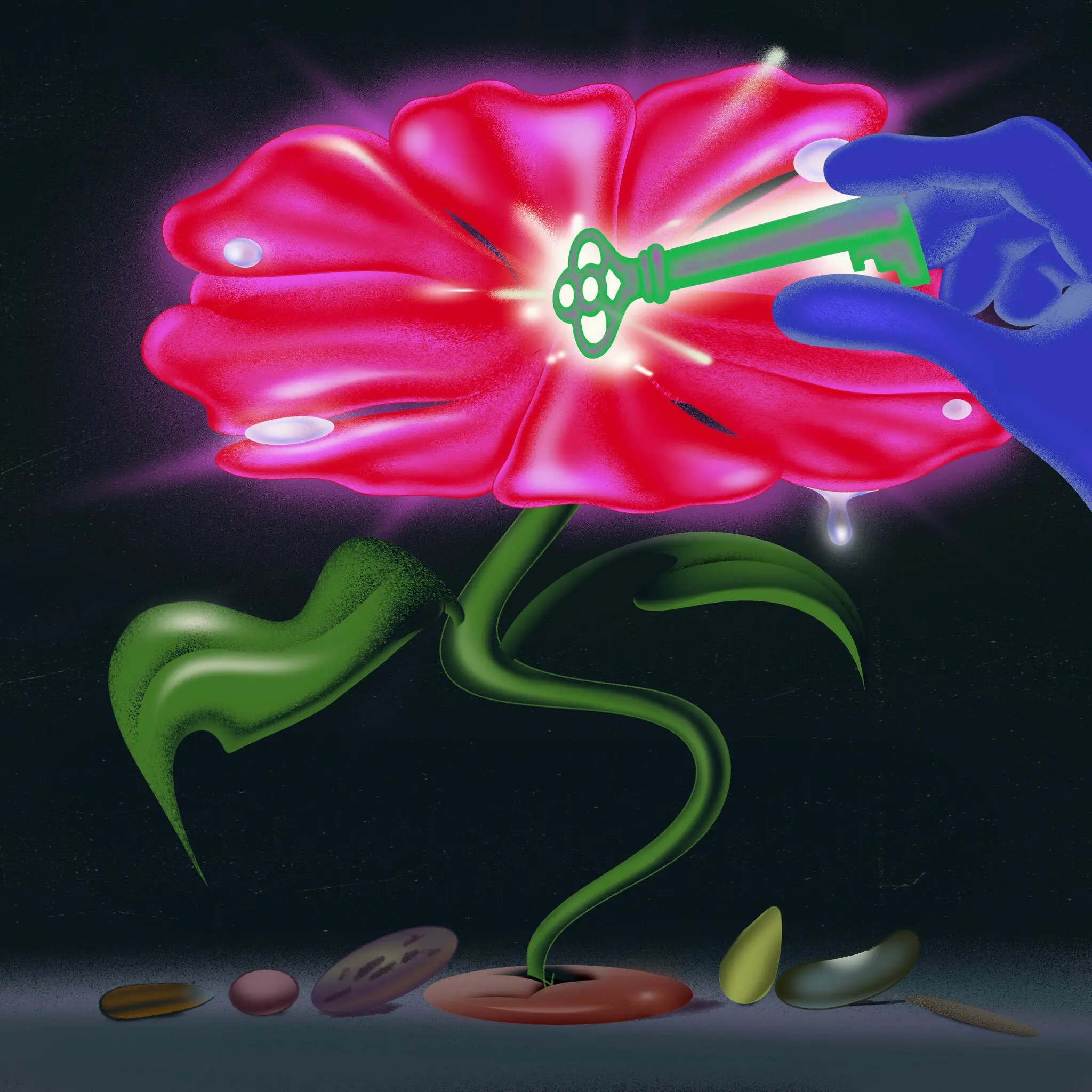
N.P.G.S. Importance. The professors note, “The collections represent a towering achievement of foresight that food security depends on the availability of diverse plant genetic resources.”
Ha. There’s that word “diverse,” and wouldn’t you know, “In mid-February,” the professors write, “Trump administration officials at what has been labeled the Department of Government Efficiency fired some of the highly trained people who do this work. A court order has reinstated them, but it’s unclear when they will be allowed to resume their work. In the meantime, uncertainty around additional staffing and budget cuts, as well as the future of the collections themselves, reigns.”
“This should unnerve every American who eats,” Hale and Kantar stress. “Our food system is only as safe as our ability to respond to the next plant disease or other emergent threat, and a strong N.P.G.S. is central to our preparedness.”
N.P.G.S. Purpose. The professors write, “Across its 22 stations nationwide, approximately 300 N.P.G.S. scientists maintain more than 600,000 genetic lines of more than 200 crop species. The collections of some crops, like wheat, are in the form of seeds.”

They posit, “But isn’t it overkill to maintain more than 62,000 different varieties of wheat?” And then in explanation comes a D word again: “The thing is, the N.P.G.S. collection of plant genetic diversity is not just a snapshot of what is currently grown to meet today’s demands. It is more like a survivalist cache: our nation’s safeguard against all future challenges to growing the food we need.”
Success at N.P.G.S. “For example,” the professors note, “when a newly evolved form of stem rust—a devastating fungal disease infecting wheat—emerged in East African fields in 1999, an international group of plant breeders turned to the N.P.G.S. collection for help. There, among the tens of thousands of patiently maintained lines, they discovered previously unknown genetic sources of resistance to the disease. Those genes now protect wheat varieties around the world, silencing for the moment the alarm of a feared global pandemic. (Just like human diseases, plant diseases do not respect borders.)”
Another Success. “In the 1980s,” Hale and Kantar describe, “scientists at a gene bank in Geneva, N.Y., helped identify genetic traits that made apples resistant to several destructive diseases, including deadly fire blight. Those traits have since been deployed in the rootstocks of over 100 million apple trees worldwide, not only generating more than $91 million annually in tree sales, but also directly supporting the nearly $23 billion American apple industry.”

Hale and Kantar observe, “The future will certainly bring new crop diseases and pests, as well as greater environmental stresses on our crops from heat, drought and flooding. In the face of such uncertainty, it is wise to gather and maintain as much genetic diversity as possible so that we’ll have the resources to sustain the food system most of us take for granted.”
N.P.G.S. Investment. “Even in the best of times,” the professors note, “the N.P.G.S. budget is shoestring and its staffing minimal, given the magnitude of its mandate. And yet, with a trivial investment of 0.000008 percent of the federal budget, N.P.G.S. scientists quietly enable and safeguard our food system, worth around $1.5 trillion. Talk about return on investment.”
Read that investment percentage again and be reminded of DOGE “efficiency.”
Musk’s Chainsaw. AAAS Science reports, “Plant breeder Neha Kothar was hired in October 2024 to streamline and improve the department’s vast collections of seeds and living crops that are key to developing improved varieties. But on 13 February she, like tens of thousands of other recent hires across the government still in probationary status, was dismissed from her job.”
In a February 24, 2025, update, Science recounts that the USDA is “reinstating Neha Kothari as leader of the department’s national program on plant genetic resources. Kothari joins several other top-tier government scientists whose firings have been reversed, but so far there is no indication that USDA has reinstated other fired germplasm system staff.”
Alas, this is an oft-repeated example of DOGE stupidity, much of which is currently being questioned in the courts.
Norway’s Svalbard Global Seed Vault. The grist.org website describes, “Far above the Arctic Circle, tucked away in the permafrost, this underground ‘doomsday’ facility is built to outlast everything from climate disasters to civil wars.” Recently, government officials and scientists gathered there to deposit “14,022 samples from 21 gene banks around the world added to what is already the planet’s largest collection dedicated to long-term seed storage.”

A Brazilian researcher stands in front of the Svalbard Global Seed Vault, February 25, 2025. Image by Crop Trust/LM Salazar via Grist.
Science continues, “Even as the Trump administration slashes support for climate-related research and Trump guts the U.S. Agency for International Development and Department of Agriculture, safeguarding crop diversity remains a priority for much of the international community.”
Indeed, it’s a portion of the international community that hitherto used to respect the United States. ds
© Dennis Simanaitis, SimanaitisSays.com, 2025


So much of what DOGE and their inept leader are doing is vile and criminal. Thanks for flagging yet another horrible lack-of-thought process. Keep it up!
Thanks, Tom, for your kind words. More’s the pity that I keep finding things to bring up.